Industrial wastewater encompasses a wide variety of types—including heavy-metal-laden wastewater, textile dyeing and printing effluents, and electroplating wastewater, among others. These waste streams contain substantial concentrations of phosphorus, nitrogen, and pollutants that are resistant to degradation. If discharged directly without treatment, they inevitably cause severe environmental contamination of water bodies and soil, and may even pose a threat to human health. Furthermore, wastewater treatment typically involves a three-stage process; consequently, the treatment procedure often generates large quantities of harmful foam. Wastewater defoamers are designed to rapidly eliminate this foam, preventing it from overflowing and polluting the environment, while also significantly reducing the operational costs associated with wastewater treatment.
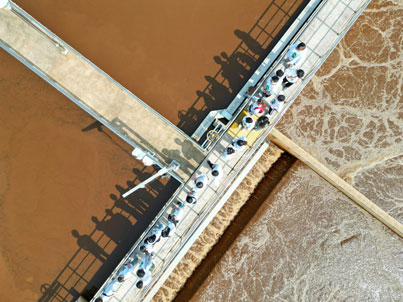
In the vast majority of wastewater streams, pollutant concentrations—particularly those of recalcitrant organic compounds, phenols, surface-active substances, and certain colloidal particles—are relatively high. This leads to an excessive organic load on the water body. When organic matter undergoes incomplete decomposition, the resulting bubbles tend to be viscous and resistant to rupture. If a defoamer is not applied promptly to suppress this foaming, the bubbles will continuously accumulate into dense masses—potentially reaching heights of up to half a meter—thereby easily triggering issues related to foam pollution. Consequently, Huashengyuan Defoamer Manufacturer has developed a specialized line of wastewater defoamers tailored to the specific characteristics of various waste streams. These products meet the defoaming requirements of numerous industries; they are easy to use, act rapidly, and require only a minimal dosage to achieve optimal defoaming results. Moreover, they serve a preventive function by inhibiting the very formation of foam.
**Usage Instructions for Wastewater Treatment Defoamers:**
Defoamers are typically added using a "multiple small doses" approach. This method prevents the adverse effects of overdosing—such as a reduction in the wastewater solution's pH level or its dissolved oxygen capacity.
Alternatively, the defoamer may be diluted prior to being dispersed into the foaming wastewater. It is important to note that diluted defoamer solutions should ideally be consumed within the same day to minimize the risk of microbial contamination.
Given that wastewater foam is often characterized by its complexity, persistence, stability, and inherent difficulty in control, the defoaming strategy employed during treatment must be carefully tailored. This involves taking into account the specific geographic location of the treatment plant, its operational processes, the surrounding production environment, and the particular species of filamentous bacteria responsible for generating the foam.
**Defoaming Mechanism of Wastewater Treatment Defoamers:**
The defoamer achieves its objective by locally reducing the surface tension of the liquid film that constitutes the foam bubble. • Destroys the elasticity of the interfacial film, causing it to lose its self-healing capability and thereby eliminating foam.
• Reduces the viscosity of the interfacial film to shorten the lifespan of the foam, thereby eliminating it.
 中文
中文
 EN
EN
